
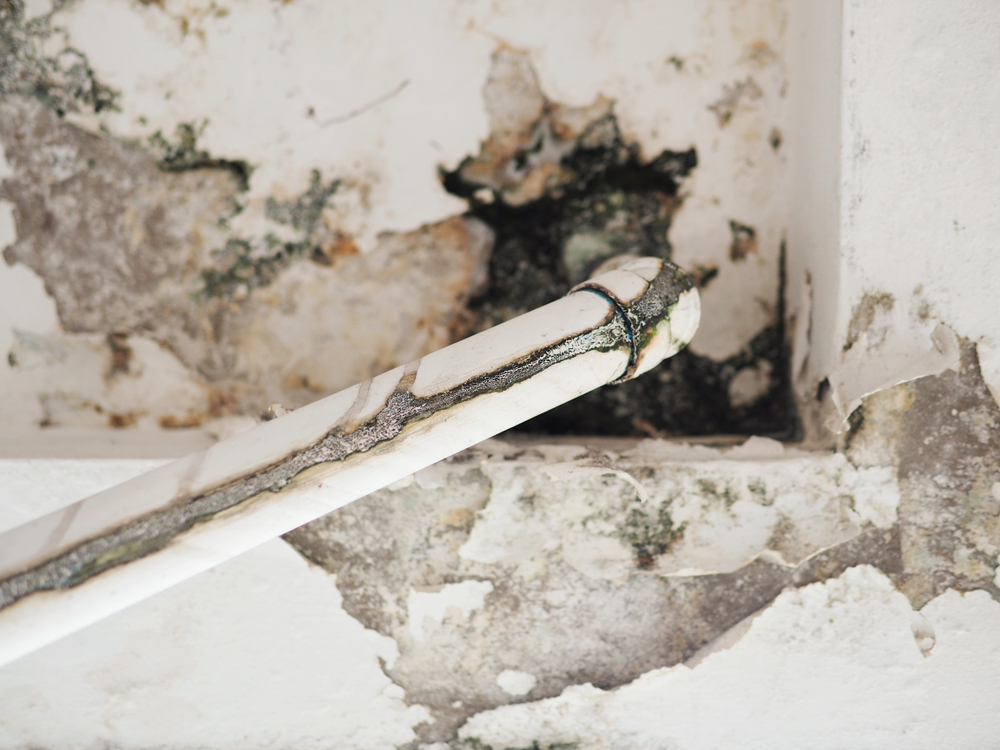
Mold in a home’s plumbing system can be dangerous for your health and your property. Unfortunately, people often don’t notice the signs of mold until they’re dealing with unpleasant odors or other mold-related symptoms.
Mold needs three things to grow: moisture, organic material, and time. Your plumbing system provides all three. Moisture is a given with pipes and plumbing, since their purpose is to move water in and out of your home. The damp environment in your home’s pipes creates an ideal environment for mold to grow.
Why Does Mold Grow on Plumbing?
Condensation on Pipes
Cold water pipes often sweat. This is particularly common during summer months in Illinois when hot, humid air meets cold pipes, resulting in condensation which then drips on wood, dry wall, insulation, or cabinets, creating the damp conditions that mold needs to grow. These conditions are particularly prevalent in basements, utility rooms, or beneath kitchen and bathroom sinks.
Leaking Pipes or Pipe Joints
Small amounts of water dripping around pipe joints, shutoff valves, or supply lines may not seem serious at first, it might not even be noticeable, but even a small leak can create enough moisture for mold to develop. Over time, this can lead to black mold in your pipes, cabinets, and walls. Because these leaks are often slow and hidden, they are usually not discovered until physical evidence of the leak, like discoloration, a musty odor, or water damage, is found.
Slow Drips Under Sinks
Even a small trickle from a drain pipe, shutoff valve, supply line, or garbage disposal connection under the sink can create enough moisture for mold to develop over time. These areas often remain dark and have very little ventilation, creating the perfect breeding ground for mold growth. Water dripping under your sink can soak into the cabinet, flooring, surrounding wood, drywall, or insulation, allowing mold to spread beyond the plumbing and damage other parts of your home.
Basement and Crawl Space Moisture
Basements and crawl spaces are common in Illinois homes, and these areas are naturally more humid than the rest of your home. If there are exposed pipes in these parts of your home, they are at greater risk of mold due to excess humidity. This is especially true in older homes with poor ventilation or uninsulated pipes. The moisture that lingers after a humid summer often goes unnoticed and can contribute to mold growth on the pipes in your basement or crawl space.
Where Mold Commonly Appears in Your Plumbing System
In Basement Pipes
Mold in any pipes running through your basement usually forms where the pipe comes into contact with exterior walls, near floor joists, or near insulation. If your basement is unfinished, the presence of mold will be made obvious by dark staining, fuzzy growth, or discoloration on the pipe itself and on any nearby wood or drywall.
Under Sinks
If moisture builds up on pipes, joints, or drains, then mold will develop directly on the plumbing underneath your sink. This moisture can keep the space damp long enough for the mold to extend beyond the pipes and onto other surfaces. Even without a visible leak, trapped humidity inside the cabinet can create the right conditions for mold to grow directly on the plumbing itself.
Around Toilets, Tubs, and Faucets
Bathrooms are naturally damp environments, which make plumbing lines and fixture connections especially prone to mold growth. Constant humidity, steam from showers, and frequent water use can keep supply lines, tub plumbing, and faucet connections damp for long periods and leave the pipes and fixtures in your bathroom at risk for mold.
Near Appliances
Plumbing connections on appliances like water heaters, dishwashers, or washing machines can be a hidden source of mold. These connections sit behind or underneath these appliances, have limited airflow, and are not inspected often. Condensation or moisture buildup can lead to mold developing directly on the water lines and connection points, even without visible water damage.
What Does Mold in Your Plumbing Look Like?
Any mold in your plumbing system can easily spread to other areas of your home if left untreated, and not all mold is the same. It can look different depending on where it is growing.
Common signs include:
- Black, green, brown, or white spots
- Fuzzy or slimy patches
- Stains around pipes or plumbing fixtures
- Rust or corrosion paired with damp areas
You may also notice:
- A musty or earthy smell near sinks, drains, or exposed pipes
- Peeling paint or bubbling drywall
- Soft wood under a sink
- Warped cabinets or flooring
Is Mold in the Sink Drain Dangerous?
In most cases, a small amount of mold in your drain is not an emergency, but it shouldn’t be ignored. Mold in drains can contribute to:
- Musty odors
- Poor indoor air quality
- Allergy or asthma symptoms
- Mold growth in other parts of your plumbing system
Common Signs Mold May Be Affecting Your Health
Mold exposure can affect people differently. The symptoms can be more severe for those with allergies, asthma, or compromised immune systems. If you notice your symptoms are more severe when you’re at home, it might be due to mold growing in your plumbing system.
Common symptoms include:
- Coughing
- Wheezing
- Nasal congestion
- Throat irritation
- Skin rashes
- Headaches
- Worsening allergy or asthma symptoms
What Should You Do if You Find Mold in Your Pipes or Drains?
If you think you have mold in your plumbing, your first step is to locate the source of the moisture, dry it out, and increase the air circulation in the area if you can. Mold spores will grow and thrive in wet conditions, so proper drying is crucial to permanently removing them. Without addressing the underlying moisture, the mold will return.
In most cases, small sections of mold on exposed plumbing might be easily treated. However, simply scrubbing the mold growing on any pipes, faucets, or drains won’t fix the issue. Using a mixture of baking soda and vinegar will properly clean the pipe and remove the mold.
Nonetheless, if you keep seeing mold in the same pipes, spreading behind walls, cabinets, or black mold in pipes, you need to contact a plumber or mold remediation professional. Depending on the extent of the damage, you might need to replace your pipes altogether.
When Should You Call a Professional?
Call a plumber if:
- You suspect a hidden leak
- You see mold repeatedly forming on or near pipes
- There is recurring moisture under a sink or in the basement
- A drain, faucet, water heater, or pipe is leaking
Call a mold remediation specialist if:
- Mold is covering a large area
- You suspect black mold in pipes or behind walls
- Mold keeps returning even after cleaning
- You continue to experience symptoms even after the plumbing issue is repaired
How to Prevent Mold in Your Plumbing
The best way to prevent mold in your plumbing is to prevent the moisture before it has a chance to build up.
You can reduce the risk by:
- Fixing leaks quickly
- Insulating cold water pipes to reduce condensation
- Using a dehumidifier in basements or crawl spaces
- Improving ventilation in bathrooms and laundry rooms
- Checking under sinks and around water heaters regularly
- Scheduling routine plumbing inspections
Keeping your indoor humidity between 30% and 50% can also help reduce the chance of mold growth.
Protect Your Home From Mold in Plumbing
Mold in plumbing is more than just an unpleasant odor or stain. It is often a sign of a hidden leak or moisture issue somewhere in your home.The sooner you identify the problem, the easier it will be to repair, preventing further damage to your home and protecting your family’s health. If you suspect mold in pipes or drains, or moisture around your plumbing system, contact the team at Robert Bair. Our experienced plumbers can help to ensure a safe and healthy living space.