
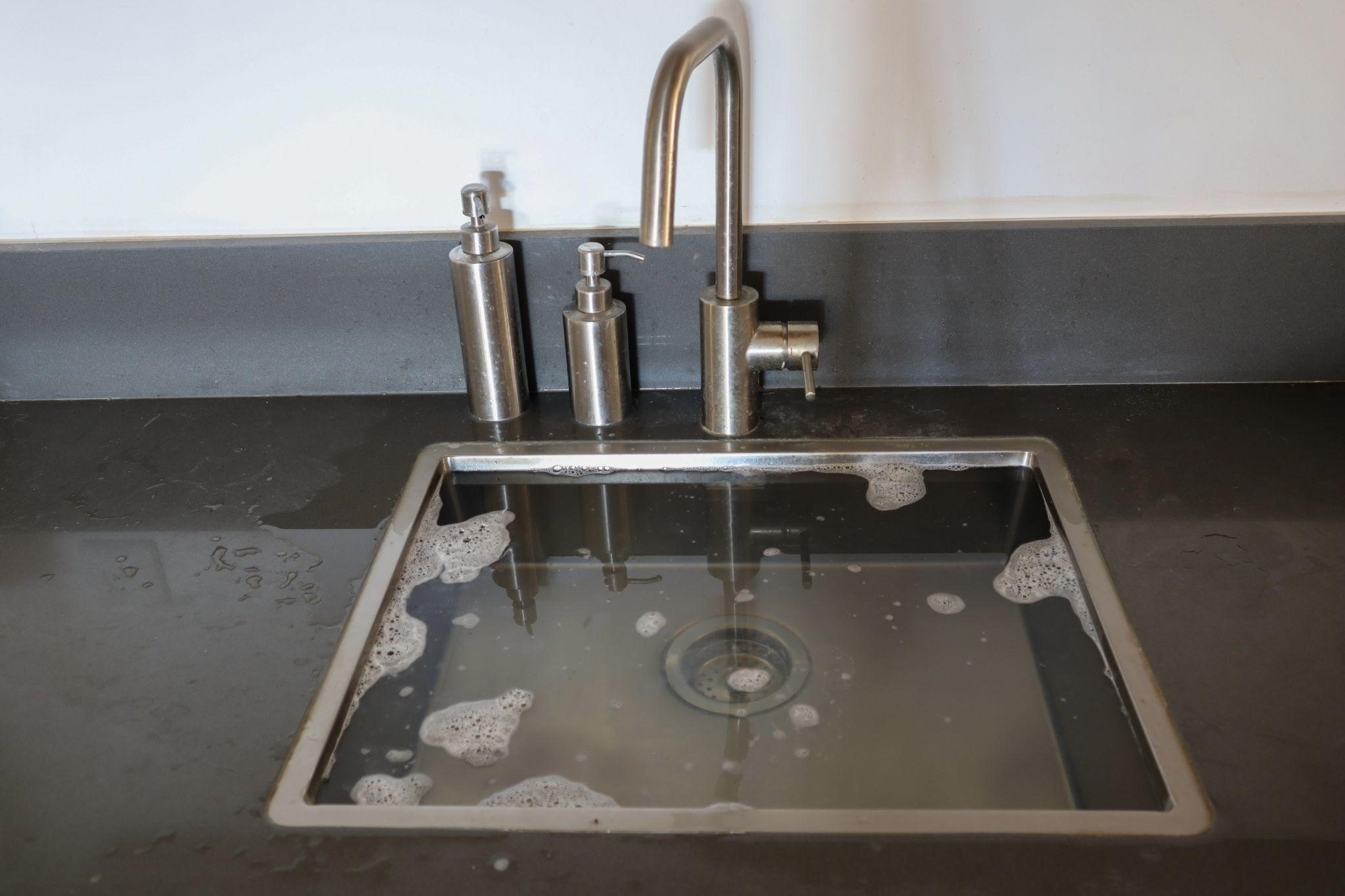
Why does your sink or shower drain water slowly sometimes, while other times it doesn’t drain at all?
It is common to think that any time your kitchen or bathroom doesn’t drain immediately that means there’s a clog. However, there is a difference between a clogged or slow drain. While a slow drain might indicate a clog might be forming, the reason behind your drainage issues might require professional intervention.
What Is a Slow Drain?
When water empties from a sink, tub, or shower more slowly than usual but does eventually finish draining, you’ve got a slow drain. It is often the first sign that there is buildup forming inside your pipes.
Common Signs of a Slow Drain
- Water pooling around the drain before slowly disappearing
- Water making gurgling or bubbling sounds
- Drains have a slight musty or unpleasant odor
- Drainage issues only affecting one fixture
- Water drains more slowly over time
Most Common Causes of a Slow Drain
- Soap scum buildup along pipe walls
- Hair accumulating in bathroom drains
- Grease residue in kitchen sink drain
- Mineral deposits caused by hard water
- Small debris caught in the p-trap
What Is a Clogged Drain?
When water cannot pass through the pipe at all, or begins backing up instead of draining, that means there is a clog in your pipe. A clogged drain means there’s a full blockage rather than a partial obstruction.
Warning Signs of a Clogged Drain
- Standing water that does not drain
- Water backing up into tubs or showers
- Multiple fixtures draining slowly at once
- Gurgling coming from different drains
- Sewage odors coming from fixtures
- Water rises in one fixture when another is used
Serious Causes of Drain Blockages
- Tree roots invading sewer lines
- Collapsed or misaligned pipes
- Foreign objects flushed or washed down drains
- Grease solidification in kitchen plumbing
- Heavy, long-term buildup obstructing water flow
Slow Drain vs. Clogged Drain: Key Differences
| Slow Drain | Clogged Drain |
|---|---|
| Water drains slowly | Water does not drain |
| Usually affects one fixture | Often affects multiple fixtures |
| Caused by gradual buildup | Caused by full obstruction |
| May improve with minor cleaning | Typically requires professional service |
Can You Fix a Slow Drain Yourself?
Smaller blockages can sometimes be removed without the help of a professional, but doing the wrong thing can do more harm than good to your plumbing.
For example, plunging your sinks or bathtubs may dislodge smaller obstructions. Clearing any visible debris, like hair, soap, or food, from around the drain opening can help improve water flow. These methods work best for isolated slow drains and are most effective if they’re done as soon as you notice your drain emptying slower than normal.
However, some DIY methods can actually make the problem worse. For instance, if you use drain cleaners too often, you may end up with corroded pipes, particularly if you live in an older home. Plunging too hard on a main sewer line clog may actually push the blockage further down the pipes.
Even if you manage to temporarily resolve the issue, it’s important to monitor how your sink or tub is draining. If it begins draining slowly again, that’s usually a sign to call a professional plumber.
Preventing Future Drain Problems
Preventing serious drain clogs starts with knowing what shouldn’t go down your drains:
- Grease
- Fats
- Cooking oils
- Hair
- Makeup
- Large food particles
- Flushable products
Installing drain strainers in sinks and showers helps catch hair, food particles, and debris before they enter your plumbing system, and cleaning them regularly prevents a slow drain from turning into a full clog.
When to Call a Professional Plumber
At Robert Bair Plumbing, Heating & Air, our licensed and insured technicians use advanced diagnostic tools to quickly determine the cause and resolve your drainage issues quickly. With decades of experience serving Chicagoland homes, we always offer expert recommendations, upfront pricing, and long-lasting solutions that are tailored to your plumbing system.
If you’re dealing with persistent slow drains, recurring clogs, or any signs of more serious problems, a plumbing inspection will ensure that your home remains protected and your plumbing system continues to function properly. Trust Robert Bair to handle your drains safely, effectively, and reliably.